
French Drains
Move water away from your foundation with a drain built to last through Quebec winters.
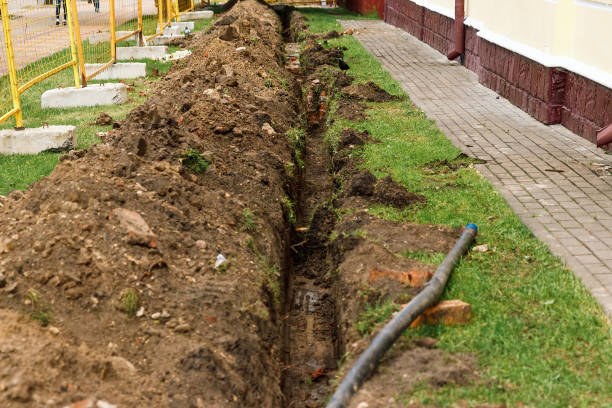
What is a French drain?
A French drain is a buried drainage line that collects groundwater and carries it away from your home. We dig a trench, line it with filter fabric, lay a perforated pipe (also called drain tile) on a bed of clean stone, cover it with more stone, fold the fabric over the top and finish with soil or sod.
Water in the ground soaks into the stone, enters the pipe through its holes and flows by gravity to a safe outlet. The fabric keeps soil and fine silt out so the pipe does not clog. From the surface, a French drain is almost invisible.
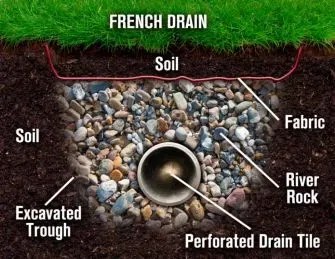
The layers, from the bottom up
- Excavated troughA trench is dug along the problem area at a steady slope, so water always flows toward the outlet.
- Filter fabricGeotextile fabric lines the trench so water can pass through while soil and silt stay out.
- River rockClean, rounded stone goes down first, then the pipe, then more stone around and above it, giving water an easy path.
- Perforated drain tileThe perforated pipe sits in the stone and collects the water. It leads to a safe outlet such as a sump, a storm connection where permitted, or a lower part of the property.
- Fabric and soilThe fabric is folded over the top and the trench is closed with soil, sod or decorative stone.
Why it matters in Montreal and Quebec
When wet soil freezes, the water in it expands. Frozen, saturated ground pushes against foundation walls, driveways and walkways, a movement called frost heave. Then it thaws, leaving the soil loose and the cracks open. A Quebec winter can repeat this freeze and thaw many times.
A French drain gives water somewhere to go before it freezes. That means less pressure against your foundation, less water finding its way into the basement and fewer damaged walls, patios and walkways.
Signs you may need one
- Water pooling in the yard after rain or snowmelt
- A damp, musty or wet basement
- Soggy lawn areas that never dry out
- Water running toward the foundation
- Heaved or sunken pavers and walkways
We inspect by camera
Before we recommend a repair, we run an inspection camera through your existing drain or drain tile. It shows us cracks, collapsed pipe, root intrusion, clogs and low spots, and we can show you what the camera sees.
That tells us whether the drain can be cleaned, repaired in one section or has to be replaced, so you pay to fix the real problem and not a guess.
Drain unclogging (débouchage de drains)
Already have a French drain or foundation drain that has stopped working? We also unclog drains. Roots, silt, sand and debris slowly block old drain lines, and the first sign is often water where it should not be.
We clear the line, test that water flows freely to its outlet, and tell you honestly whether the drain can be saved or has to be replaced. This service is also available to property managers and businesses.
Talk to us about your project
Tell us what is happening on your property and we will inspect it, explain the options clearly and give you a written estimate.
Start a Conversation